
Lifespan guide
Solar Panel Lifespan and How Long Inverters and Batteries Last
Panels outlast the parts wired to them. Here is how long panels, inverters and home batteries last, and what their warranties actually cover.
We answer the phone or call back the same working day.
Licensed and insured
The whole job quoted before we start
Free, no-obligation estimates
The part that outlasts the rest
How long solar panels last
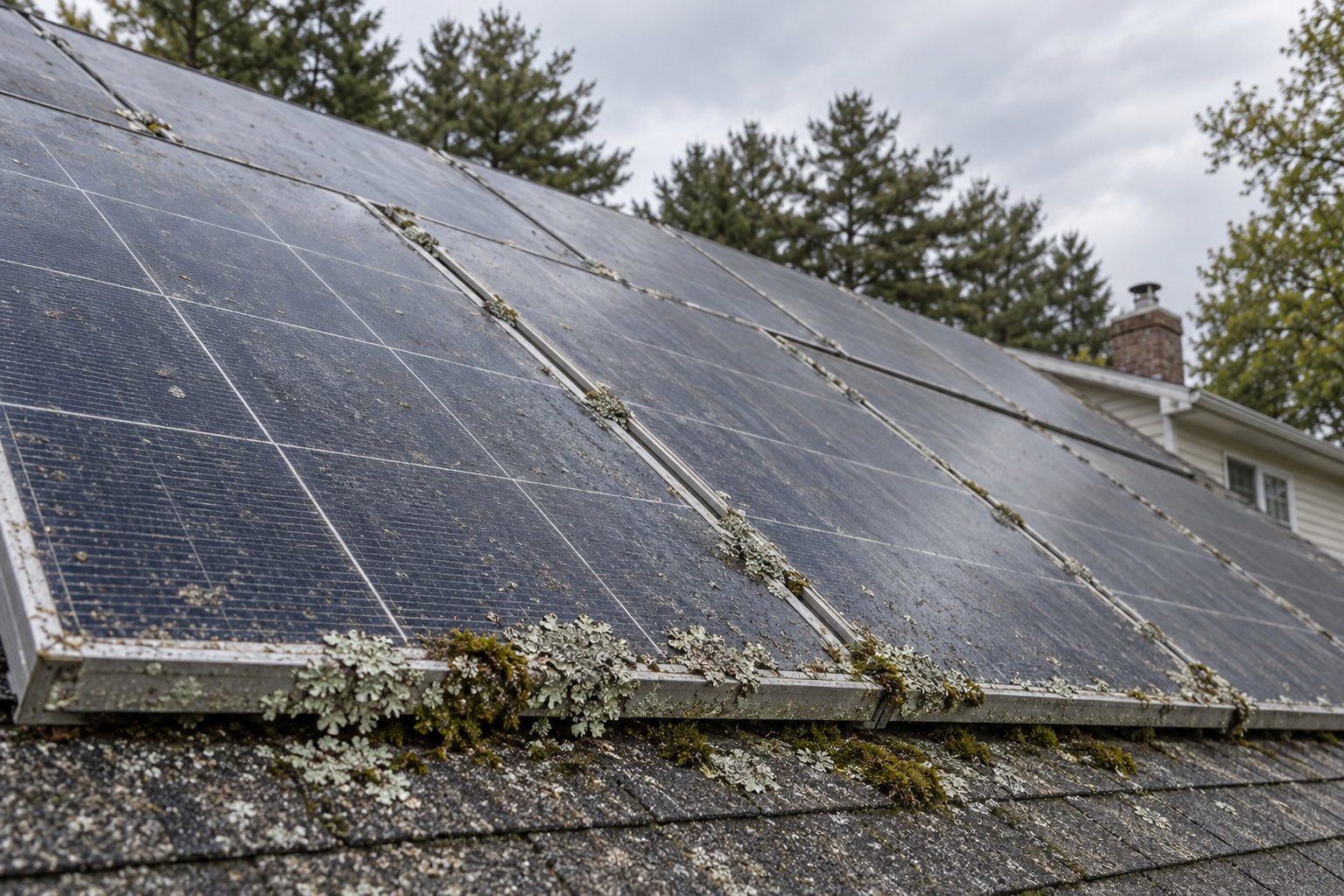
Solar panels commonly carry a 25-year performance warranty, and a system that is 10 years old usually still has 15 to 20 or more years of panel life ahead of it.
Panels are the "photovoltaic" part of the system, the cells that turn sunlight into electricity; the U.S. Department of Energy explains how they do it. With no moving parts, they are usually the last thing on the roof to give out. The electronics wired to them wear out first.
That is why an aging system rarely needs replacing whole. In most cases a targeted repair costs far less than a new system, because the panels still have years of work in them.
Living with a system that is ten years old or more? Call and we will look at what it has left before anyone talks about replacing it.
(413) 724-0582One system, four clocks
Here is how long each part of a home system typically lasts.
-
Solar panels25+ years
A 25-year performance warranty is common, and the panels often keep going past it.
-
MicroinvertersLonger
One small inverter under each panel, built to outlast a string inverter.
-
String inverter10 to 15 years
One central box for a series of panels, and the first major part most systems replace.
-
Home battery10+ years
At least ten years, as long as it gets regular maintenance.
-
The box that wears out first
Inverter lifespan
A "string inverter" typically lasts 10 to 15 years, and "microinverters", the small boxes under each panel, last longer.
10 to 15Years for a typical string inverterThat puts an inverter replacement inside the life of the panels on most systems. A string inverter makes itself known when it quits, because the whole series of panels behind it goes quiet. A microinverter can fail with no sign at all: the rest of the array keeps running while that one panel drops out, and each silent failure cuts output by 10 to 25 percent.
String Inverter vs Microinverter -
Backup that keeps its charge
Home battery lifespan
Industry research says a solar battery can last at least ten years, as long as it gets regular maintenance.
10+Years with regular maintenanceMaintenance is the condition that matters. A battery service checks the "BMS", the battery management system that keeps track of the battery's health, so a weak battery turns up at a service visit rather than on the night the power goes out.
Home Backup Power
Read the fine print
Panel, inverter and workmanship warranties
Panels typically carry a 25-year performance warranty and a 10 to 12 year product warranty, inverters carry 5 to 12 years, and stronger packages run 25 years on labor and roof penetrations too.
Here is what each common warranty covers and for how long.
| Warranty | Typical term | What it covers |
|---|---|---|
| Panel performance | 25 years | The power the panels produce over the years. |
| Panel product | 10 to 12 years | The panel itself, as a piece of equipment. |
| Inverter | 5 to 12 years | The inverter that turns the panels' power into household current. |
| Stronger packages | 25 years | Production, labor, roof penetrations, and the panels and inverters together. |
| Maxeon panels | 40 years | The panel warranty Maxeon puts on its panels. |
-
The roof under the array
Every place a mount goes through the roof is a "roof penetration", and it is often warrantied separately from the panels. Ask what covers the roof under the array, not only the equipment on top of it.
-
When the installer is gone
If the installer who put your system in has gone out of business, a manufacturer warranty claim gets harder. Call us before you write the system off, and we will tell you plainly what we find.
Call Incite Solar Solutions
Wear and tear on the roof
What wears panels down
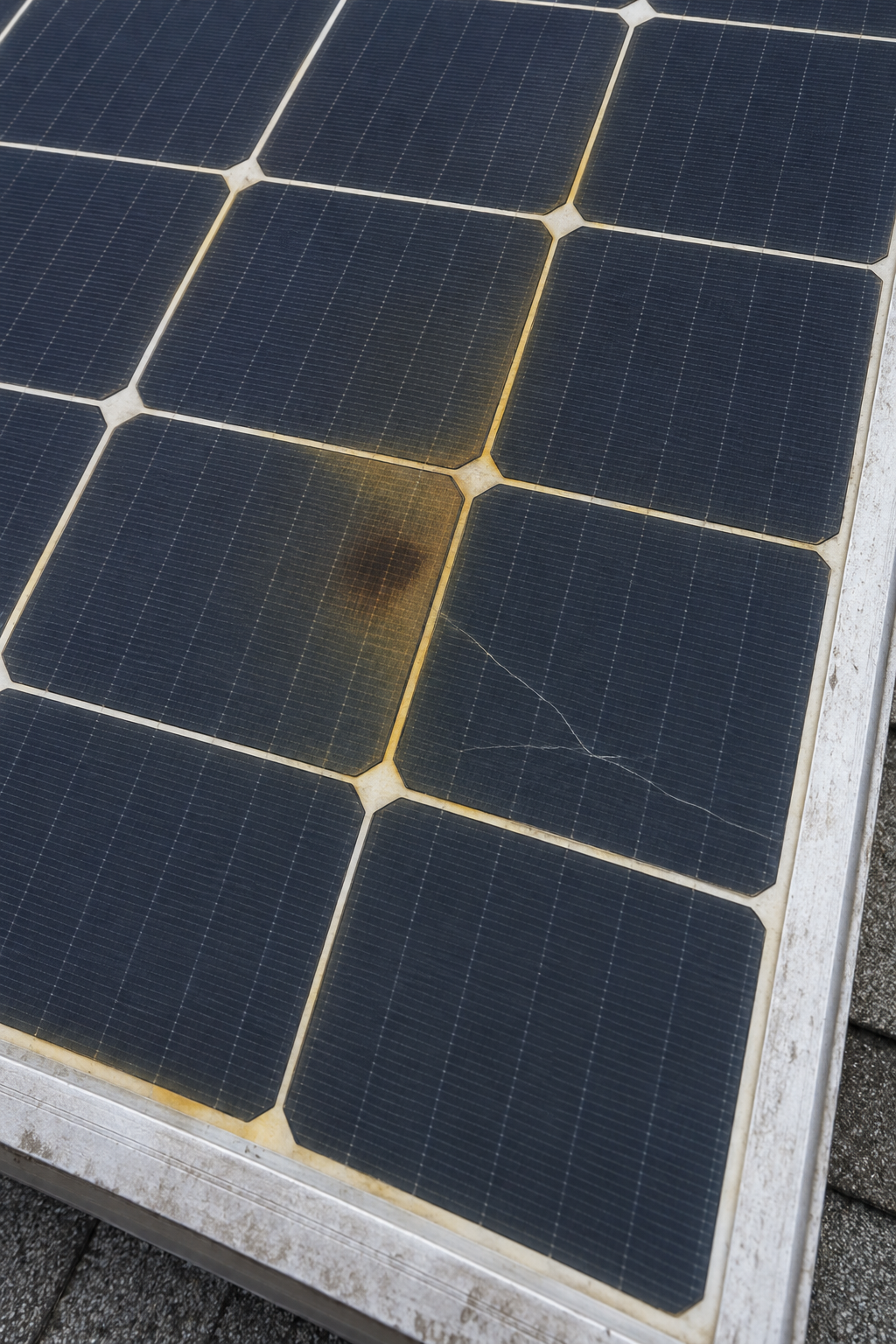
Panels wear through cracked cells, "delamination", microcracks, "PID degradation" and hot spots, and a repair visit finds each one.
These are the ways panels wear, one per line.
- Cracked cellsFractures in the cells under the glass
- MicrocracksFine cracks too small to see from the yard
- DelaminationLayers separating, the peeling or bubbling look
- PID degradationPotential-induced degradation, a panel slowly losing power
- Hot spotsOverheating cells, sometimes a burn mark on the panel
Most of these hide from the ground. An electrical "IV-curve" test of panel output and thermal imaging are how they turn up.
Solar Panel RepairIn their own words
What neighbors say about working with us
Our Google reviews from owners around Pittsfield, as they wrote them.
The representatives we worked with at Incite - Jonathan and Daniella were incredible and kept us informed every step of the way. The electrical team and installation team were wonderful and efficient and did an amazing job under brutally hot conditions! We are thrilled that we decided on Incite Solar Solutions and know that going forward it will be the best decision we ever made. We are fortunate that all of our panels are in the back and we actually forget they are there. Great installation.
We're in line to get a system thru SunPower with Derek as our rep. So far so good--he's been great! We had a hiccup with our first home site inspection--seems that the info never made it back to Incite. Then Peter Walters was assigned to come out--night and day difference from our first home site visit. Peter totally knew what he was doing. Hope all continues to go well!
We had Pete survey our property and he did an amazing job, took his time explaning to us everything he was doing and in what condition our home was in. He did a pretty awesome job!
Ask about your own system
How much life does your system have left?
Call, tell us how old the system is and what it has been doing, and we will set up a free, no-obligation estimate to look at the panels, the inverter and the battery.
We quote the whole job before we start, with no surprise charges after.
We answer the phone or call back the same working day.